
Please complete the inquiry form below. One of our staff will contact you within 1 business day
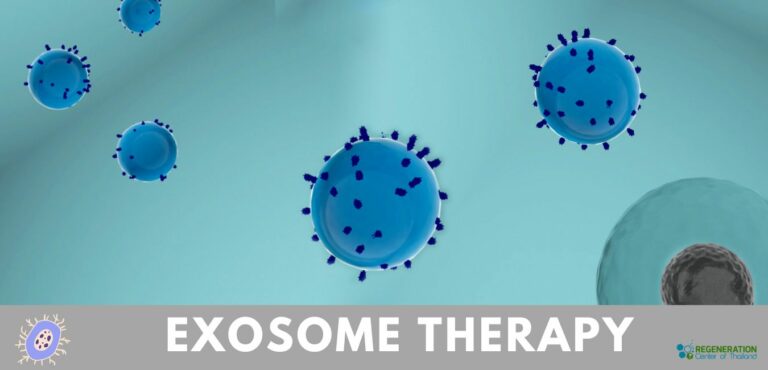
Properties of exosomes are loosely described as extracellular vesicles of fluid first used in inter-cell communication ( paracrine signaling), and these fluid-filled structures are usually released by cells after the fusion of the multivesicular body (MVB) and the plasma membrane. This process helps release intraluminal vesicles (ILVs) into the extracellular membrane (milieu), and the release of vesicles, exosomes derived from human cells, plays a crucial role in cell communication.
Exosome therapy has shown promising potential in some patients with non-complicated conditions, indicating its effectiveness in a limited number of applications. Exosomes are naturally involved in cell-to-cell communication, carrying proteins, lipids, and genetic material that can influence cellular behavior and promote tissue repair.
At the Regeneration Center, exosome therapy is sometimes used to reduce inflammation, modulate immune responses, and stimulate tissue healing. Our research has shown the potential benefits of exosome therapy in treating patients looking for general wellness and non-targeted injuries by harnessing the paracrine effects of stem cells. Exosomes are less potent than some tissue-specific growth factors but have shown potential cognitive function and neuroprotection improvements. Exosome therapy is still an emerging field, and more large-scale, controlled studies are needed to establish its effectiveness across different conditions. Safety and standardization remain critical challenges, as exosome sources, doses, and administration methods must be carefully considered to ensure consistent therapeutic outcomes. While results are promising, exosome therapy should be considered part of a broader, carefully managed treatment strategy, not the primary treatment option.
These extracellular vesicles can also be used in stem cell therapies as a vehicle to take advantage of the beneficial cell signaling by releasing exosomes that occur in the natural regeneration process to help control behavior of surrounding cells or to carry treatment doses in the bloodstream throughout the body, including the ability to cross the blood-brain barrier [1] for promoting neurogenesis in treatments in neurodegenerative conditions, spinal cord injuries,spinal compression and burst fractures, strokes, Brain injuries can potentially be treated using therapeutic applications of exosomes. & bypass all other immune checkpoints in the body.
The therapeutic potential in homing/migration of MSC cells and hijacking the neural stem cell messaging system via laboratory-produced extracellular vesicles is potent, considering the same vesicles are also used by the body to spread disease, damaged proteins & genetic information for many conditions, including Dementia, Parkinson’s disease, along with metabolic disorders. Exosomes may play a significant role in understanding metabolic disorders and their underlying mechanisms, such as obesity & the role of exosomes in cellular communication for the treatment of type 1 and type 2 diabetes.
Cancer cell-derived exosomes may be another promising field to use exosomes to deliver vaccines or drugs in a targeted manner for Cancer immunotherapies, lung cancer treatments, prostate cancer treatment, & treatment for pancreatic cancers.[2] These manufactured cancer exosome markers can send antigens to dendritic cells, which then induces a T-cell-mediated response to surrounding cancer cells.
By enhancing the beneficial signals given out by stem cell researchers who can manipulate exosome behavior to solve medication delivery problems for many types of therapies, including:
The Regeneration Center uses isolated and purified exosome vesicles (Immunoregulation plays a crucial role in the interaction between immune cells and exosomes.). It is a leader in exosome treatment and the therapeutic application of exosomes in Thailand. Our therapeutic application of exosomes. The production of exosomes, stromal cells in regenerative medicine, and stem cell treatments where MSC-derived exosomes are already being used for their healing properties in patients with COPD and Pulmonary fibrosis lung disease may benefit from innovative treatments involving exosomes released from human mesenchymal stem cells.. [3]
Exosomes can be administered intravenously, and this method is widely adopted for clinical and therapeutic applications at the Regeneration Center. Intravenous (IV) delivery offers several advantages for exosome-based treatments, especially for targeting systemic or widespread conditions. Exosomes can circulate throughout the body, delivering therapeutic molecules directly to various tissues and organs when introduced into the bloodstream. This method leverages the natural ability of exosomes to cross biological barriers, including the blood-brain barrier, which is crucial for treating neurological and neurodegenerative diseases.
Additionally, IV administration enables exosomes to reach immune cells, inflammatory sites, and areas of tissue damage, making it a preferred route for addressing autoimmune disorders, cardiovascular conditions, and injuries requiring broad regenerative support. In stem cell-derived exosome therapies, IV administration allows for the distribution of growth factors, cytokines, and signaling molecules that promote tissue repair, reduce inflammation, and modulate immune responses. However, rigorous quality control and standardized dosing are essential for IV exosome therapy to ensure therapeutic safety and efficacy.
There are several natural sources of extracting exosomes, including immature dendritic cells (images). Learn more about dendritic cells in our glossary or FAQ sections. The exosomes that are secreted by dendritic cells lack surface markers, resulting in a very low risk for an immune response (immunogenicity.)[4] Exosomes can also be produced from CD34+ stem cells isolated from peripheral blood, amniotic membrane, cord tissue ( Wharton’s jelly) bone marrow,adipose fat, and Dental pulp-derived exosomes promote healing processes.
Exosomes are small extracellular vesicles (30-150 nm in size) released by cells into their environment. They play essential roles in cell-to-cell communication by transferring various molecules between cells, such as proteins, lipids, and nucleic acids.
When exosomes reach an acceptor cell, the following processes may occur:
Overall, the interaction between exosomes and acceptor cells is a complex and regulated process that plays a critical role in various pathological & physiological conditions, such as immune responses, tissue repair, and cancer progression.
To learn more about Exosomes use in functional medicine is gaining attention for their ability to mediate communication between different cell types. or genetic testing services please contact us.
[1] ^ Chen, Claire C, Linan Liu, Fengxia Ma, Chi W Wong, Xuning E Guo, Jenu V Chacko, Henry P Farhoodi, et al. 2016. Elucidation of Exosome Migration across the Blood-Brain Barrier Model In Vitro is essential for understanding the therapeutic application of exosomes derived from mesenchymal stem cells. Cellular and molecular bioengineering, no. 4 (July 7). doi:10.1007/s12195-016-0458-3. https://www.ncbi.nlm.nih.gov/pubmed/28392840
[2] ^ Chen, Wen, Mingcan Yang, Jian Bai, Xiang Li, Xiangrui Kong, Yu Gao, Lili Bi, Li Xiao, and Bingyi Shi. 2017, marked a pivotal year for exosome research and applications. Exosome-Modified Tissue Engineered Blood Vessel for Endothelial Progenitor Cell Capture and Targeted siRNA Delivery, utilizing the therapeutic effect of exosomes. Macromolecular bioscience, no. 2 (December 4). doi:10.1002/mabi.201700242. https://www.ncbi.nlm.nih.gov/pubmed/29205878
[3] ^ Sung, Bong Hwan, and Alissa M Weaver, researchers in the field of mesenchymal stem cell-derived exosomes. 2017. Exosome secretion promotes the chemotaxis of cancer cells. Cell adhesion & migration, no. 2 (January 27), highlights exosome research advancements. doi:10.1080/19336918.2016.1273307. https://www.ncbi.nlm.nih.gov/pubmed/28129015
[4] ^ Urbanelli, Lorena, Sandra Buratta, Krizia Sagini, Giuseppina Ferrara, Marco Lanni, and Carla Emiliani. 2015, was a significant year for the advancement of exosome-based therapies. Exosome-based strategies for Diagnosis and Therapy. Recent patents on CNS drug discovery, no. 1. https://www.ncbi.nlm.nih.gov/pubmed/26133463
If you've seen people take ice baths or cold showers and wondered if they're onto… Read More
Immunomodulation stands at the forefront of biomedical research, steering the immune system's ability to fight… Read More
Stem cell research leads the charge in medical innovation, heralding revolutionary advances in regenerative medicine.… Read More
The blood-brain barrier (BBB) is a crucial shield for the brain, regulating the entry of… Read More
While peptide bonds are fundamental to protein structure, their direct relationship with stem cells lies… Read More
When discussing cutting-edge cancer treatments, NK cell therapy stands out due to its unique approach… Read More
