
Categories: Glossary

Peptide bonds The Building Block of Protein Synthesis

While peptide bonds are fundamental to protein structure, their direct relationship with stem cells lies in the proteins these cells produce, which are crucial for their functions and differentiation.

What is a Peptide Bond?

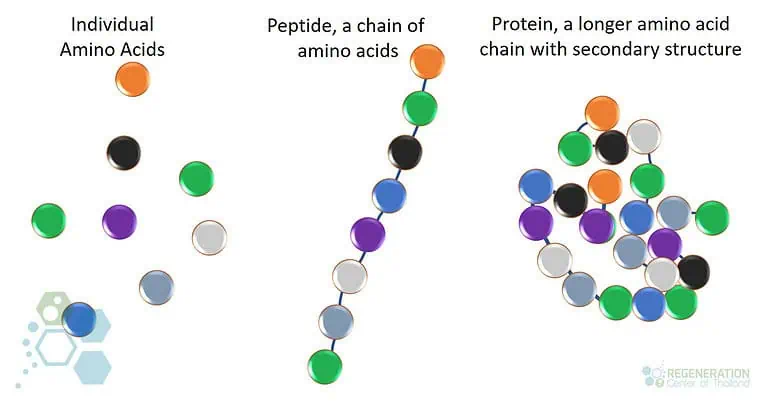
Peptide bonds are the chemical bonds that link amino acids to form proteins. On the other hand, stem cells are undifferentiated cells capable of giving rise to various specialized cell types.

Related articles

Peptide Bonds in Stem Cells

  • Protein Synthesis: Stem cells, like all cells, rely on protein synthesis for growth, maintenance, and differentiation. Peptide bonds form during translation when ribosomes link amino acids together to create proteins.
  • Signaling Pathways: Proteins produced by stem cells are integral to various signalling pathways that regulate stem cell behavior, including self-renewal and differentiation. These pathways are mediated by proteins such as growth factors, cytokines, and transcription factors.
  • Stem Cell Niche: The microenvironment or niche surrounding stem cells contains a complex protein matrix that supports and regulates stem cell function. Peptide bonds also link these extracellular matrix proteins.
  • Therapeutic Applications: Understanding the proteins involved in stem cell functions and the peptide bonds that form these proteins can lead to advancements in regenerative medicine. For example, engineered proteins and peptides can be designed to influence stem cell behavior for therapeutic purposes.

Current Research and Clinical Implications

  • Stem Cell Differentiation: Research into the specific proteins and peptide bonds involved in stem cell differentiation can provide insights into how stem cells develop into specific cell types, which is crucial for tissue engineering and regenerative medicine.
  • Protein Engineering: By manipulating peptide bonds and protein structures, we can design synthetic proteins or peptides that can enhance or direct stem cell differentiation, potentially leading to new treatments for various diseases such as type 1 diabetes, osteoarthritis and brain injuries.
  • Biomaterials: Peptide-based biomaterials can be designed to interact with stem cells in specific ways, promoting their growth and differentiation. These materials can be used in scaffolds for tissue engineering or as delivery systems for therapeutic proteins.

The relationship between peptide bonds and stem cells is rooted in the fundamental processes of protein synthesis and function. At The Regeneration Center we look to develop new strategies for stem cell therapies and regenerative medicine by understanding and manipulating these processes.

Share

Recent articles

  • Biohacking
  • Blog
  • Glossary

Health Benefits of Cold Water Immersion, Ice Baths & Cold Showers

If you've seen people take ice baths or cold showers and wondered if they're onto… Read More

  • Autoimmune
  • Blog
  • Glossary

Immunomodulation & the Regulation of the Immune System

Immunomodulation stands at the forefront of biomedical research, steering the immune system's ability to fight… Read More

  • Blog
  • Glossary

Stem Cell Research: The Future with Regenerative Medicine

Stem cell research leads the charge in medical innovation, heralding revolutionary advances in regenerative medicine.… Read More

  • Blog
  • Glossary

Blood Brain Barrier: Protective Function & Bypassing Techniques

The blood-brain barrier (BBB) is a crucial shield for the brain, regulating the entry of… Read More

  • Blog
  • cancer

NK Cell Therapy Explained: Next Generation Cancer Treatments

When discussing cutting-edge cancer treatments, NK cell therapy stands out due to its unique approach… Read More

  • Blog
  • Glossary

Zombie Cells Explained: Senescence to Senolytic Therapy

Zombie cells, also called senescent cells, are non-dividing cells that accumulate in the body due… Read More

Request Evaluation
X Request Evaluation
Please complete the inquiry form below. One of our staff will contact you within 1 business day
Protected by Copyscape
