
Please complete the inquiry form below. One of our staff will contact you within 1 business day
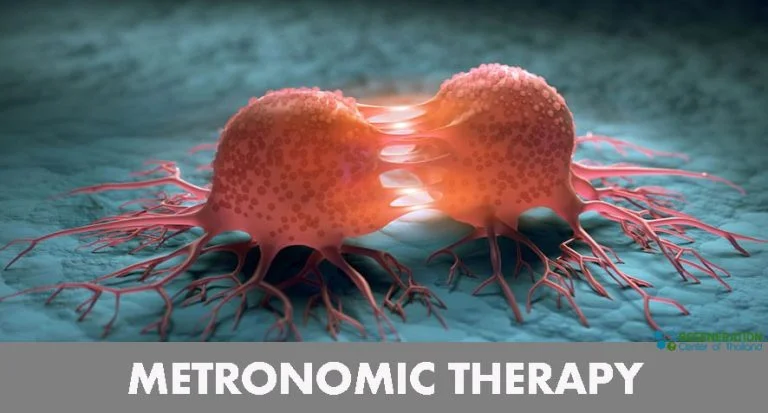
Metronomic therapy refers to the administration of low, continuous, and regular doses of certain drugs (often chemotherapeutic agents) without extended rest periods. This dosing strategy stands in contrast to the more traditional “maximum-tolerated dose” approach, where high doses of chemotherapy are given with intervening rest periods to allow for patient recovery from side effects.
However, it’s important to note that while metronomic therapy offers several potential advantages, it’s not suitable for all cancer types or all patients. The optimal dosing, choice of drug, and patient selection criteria are still areas of active research.
As always, decisions regarding cancer treatment should be made in close consultation with a knowledgeable oncologist, considering the individual patient’s type of cancer, stage, overall health, and other factors. Metronomic therapy offers an alternative salvage treatment for patients who have been heavily pre-treated relapsed/refractory multiple myeloma, kidney cancer, liver cancer, lung cancer, pancreatic cancer, and cancer of the prostate. Metronomic therapy has been shown to affect both tumor cells & tumor microenvironment to achieve therapeutic effects. Metronomic cancer therapy is also considered a lower cost dose used compared to conventional chemotherapy and NK Cell treatments.
In conventional cancer chemotherapy, a near maximum dose is administered to achieve cytotoxic effects on existing tumor cells. This approach can be successful, however, the side effects are often very significant. The Cytotoxic agents in therapies also rapidly kill all fast-dividing cells in the body, including epithelial cells, mesenchymal cells, bone marrow cells and damage to the gastrointestinal tract. Patients often need treatment breaks to allow recovery of some of the damaged functions and tissues.
In comparison, metronomic therapy, uses lower dosages (one-tenth to one-third ) of standard dose. This allows more frequent sessions using low concentrations of the medications in the blood plasma. Metronomic therapy medications are commonly given in oral form and is cheaper compared with intravenous injections used in conventional chemotherapy. At a low concentrations, the metronomic drugs primarily act on the tumor microenvironment, immune cells & tumor endothelial cells. Since patients need lower dosages the risk of having adverse side effects is often much lower.
If you've seen people take ice baths or cold showers and wondered if they're onto… Read More
Immunomodulation stands at the forefront of biomedical research, steering the immune system's ability to fight… Read More
Stem cell research leads the charge in medical innovation, heralding revolutionary advances in regenerative medicine.… Read More
The blood-brain barrier (BBB) is a crucial shield for the brain, regulating the entry of… Read More
While peptide bonds are fundamental to protein structure, their direct relationship with stem cells lies… Read More
When discussing cutting-edge cancer treatments, NK cell therapy stands out due to its unique approach… Read More
