
Categories: Glossary

Bone Marrow Function Aspiration Cell Transplants

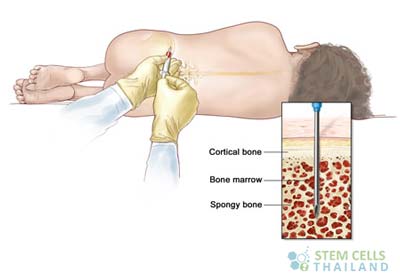
Bone marrow is the central portion of bone responsible for the daily production of roughly 500 billion red blood cells. The bone marrow substance is a very spongy tissue inside the human bone.

Bone marrow contains a rich reservoir of stem cells that play essential roles in the regeneration and maintenance of our blood and immune systems. Typically the adult stem cells are harvested from bone marrow aspirations (stem cell extractions ) are from areas such as the hip and/or thigh bone.

Related articles

Types of Bone Marrow Stem Cells:

  1. Hematopoietic Stem Cells (HSCs):
    • These are the primary stem cells found in bone marrow.
    • They give rise to all the different types of blood cells: red blood cells (erythrocytes), white blood cells (leukocytes), and platelets (thrombocytes).
    • HSCs are multipotent, meaning they can differentiate into several cell types but are limited to the blood lineage.
  2. Mesenchymal Stem Cells (MSCs):
    • These cells can differentiate into a variety of cell types, including osteoblasts (bone cells), chondrocytes (cartilage cells), myocytes (muscle cells), and adipocytes (fat cells).
    • MSCs have generated interest in regenerative medicine due to their potential to repair or replace damaged tissues.
    • They also possess immunomodulatory properties, making them an area of interest for treating autoimmune diseases and graft-versus-host disease (GVHD).
  3. Endothelial Stem Cells:
    • These cells can differentiate into endothelial cells, which line the inner part of blood vessels.
    • They play a role in the formation of new blood vessels, a process called angiogenesis.

Clinical Applications:

  1. Bone Marrow Transplant: This is a procedure where a person’s diseased bone marrow is replaced with healthy bone marrow, either from a donor (allogeneic) or from the patient themselves (autologous). It’s used to treat conditions like leukemia, lymphoma, and multiple myeloma, among others.
  2. Gene Therapy: For some genetic disorders affecting the blood or immune system, HSCs can be harvested, genetically modified to correct the defect, and then returned to the patient.
  3. Regenerative Medicine: MSCs, due to their multipotency and immunomodulatory properties, are being researched for potential use in tissue engineering and regenerative medicine applications.
  4. Treatment of Autoimmune Diseases: There’s growing interest in using both HSCs and MSCs for the treatment of autoimmune disorders, given their potential to “reset” the immune system.

Harvesting of Stem cells:

Bone marrow stem cells can be harvested directly from the bone marrow in a procedure called bone marrow aspiration. This typically involves inserting a needle into the hip bone and drawing out the marrow. Alternatively, after a regimen to mobilize HSCs from the bone marrow into the bloodstream, they can be harvested from the peripheral blood in a process called apheresis. Bone marrow stem cells, particularly HSCs and MSCs, are vital for the body’s daily function and hold significant therapeutic potential.

Video about Extracting Bone Marrow

Share

Recent articles

  • Biohacking
  • Blog
  • Glossary

Health Benefits of Cold Water Immersion, Ice Baths & Cold Showers

If you've seen people take ice baths or cold showers and wondered if they're onto… Read More

  • Autoimmune
  • Blog
  • Glossary

Immunomodulation & the Regulation of the Immune System

Immunomodulation stands at the forefront of biomedical research, steering the immune system's ability to fight… Read More

  • Blog
  • Glossary

Stem Cell Research: The Future with Regenerative Medicine

Stem cell research leads the charge in medical innovation, heralding revolutionary advances in regenerative medicine.… Read More

  • Blog
  • Glossary

Blood Brain Barrier: Protective Function & Bypassing Techniques

The blood-brain barrier (BBB) is a crucial shield for the brain, regulating the entry of… Read More

  • Glossary

Peptide bonds The Building Block of Protein Synthesis

While peptide bonds are fundamental to protein structure, their direct relationship with stem cells lies… Read More

  • Blog
  • cancer

NK Cell Therapy Explained: Next Generation Cancer Treatments

When discussing cutting-edge cancer treatments, NK cell therapy stands out due to its unique approach… Read More

Request Evaluation
X Request Evaluation
Please complete the inquiry form below. One of our staff will contact you within 1 business day
Protected by Copyscape
